
Audit finds more counties not keeping up with secondary road maintenance
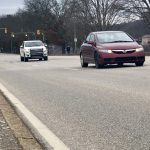
CHARLESTON -- Secondary roads have been on the minds of lawmakers this legislative session, but the problems with maintenance might be worse than some think.
A new report from the Legislative Auditor’s Office found that the state’s 10 Division of Highways districts consisting of 55 counties and 31 expressways maintenance organizations have spent well below the percentage required for road maintenance activities.
“With a few exceptions, both maintenance organizations in all 10 districts spent less than 70 percent on core maintenance, in some cases considerably less,” said Legislative Auditor Aaron Allred.
RETREADING
At the request of Sen. Bob Beach, D-Monongalia, and Delegate Isaac Sponaugle, D-Pendleton, the Legislative Auditor’s Office released a preliminary report Jan. 7 looking at secondary road maintenance activities in DOH districts 4 and 5.
District 4 includes Doddridge, Harrison, Marion, Monongalia, Preston and Taylor counties. District 5 includes Berkeley, Grant, Hampshire, Hardy, Jefferson, Mineral and Morgan counties.
According to the report, each district, county and expressway underneath DOH is required to submit an annual plan, which includes their core maintenance plans. These organizations are required to use 70 percent of their budget for core maintenance activities, such as paving, pothole repair, mowing, and ditch maintenance.
Between 2009 and 2017, only two out of the 13 counties in districts 4 and 5 hit that 70 percent goal for core maintenance activities according to the January report.
“While non-core maintenance activities are important...the DOH encourages its county and expressways maintenance organizations to spend no more than 30 percent on non-core maintenance,” Allred said. “In most cases each year county maintenance organizations were spending 40 to 50 percent on non-core maintenance and around 50 to 60 percent on core maintenance.
That report inspired the Legislative Auditor’s Office to look at the entire state. The full report, released Thursday, includes all 10 DOH districts, county offices and the state’s 31 expressway agencies.
CHECK ENGINE LIGHT
Looking at the state as a whole, auditors said the majority of county and expressway organizations spent considerably less than the 70 percent for core maintenance in their annual plans between fiscal years 2012 through 2018.
“County maintenance organizations for Mercer, Barbour and Wood Counties were at or close to 70 percent,” Allred said. “For expressways maintenance organizations, the 70 percent goal was met less frequently, with Hardy and Pocahontas Counties meeting the goal in only one year in the seven-year period.”
DOH has used the 70 percent core maintenance requirement since 2005, when the agencies’ Budget Division changed how annual plans were created by county, expressway, and districts.
According to the full report, only District 10 reached the 70 percent requirement; in 2013 and 2014. District 10 includes McDowell, Mercer, Raleigh and Wyoming counties. District 4 had the lowest percentages, despite the fact the North Central West Virginia and Morgantown is one of the fastest growing regions of the state.
Broken down by county, Pleasants County met the goal in 2013, and Wood County met the goal between 2012 and 2015. Both counties are in District 3. In District 5, Hampshire met the goal in 2015 and 2016. Mineral County also met the goal in 2016. Barbour County in District 7 met the goal between 2012 and 2016. In District 10, Mercer met the goal every year but 2018, Wyoming County met the goal from 2013 to 2015, and Raleigh County met the goal in 2013.
HITTING THE BRAKES
According to Allred, the DOH emphasized that 100 percent of maintenance funds are spent each year within the counties and districts.
“There are five possible explanations provided by DOH for not meeting the 70 percent core maintenance goal,” Allred said. “The reasons are weather challenges, labor challenges, possible accounting issues, influx of supplemental/special funds, and extended use of roads with the sudden boom of the natural gas industry and subsequent truck traffic in the areas of study.”
In a response to the report, Department of Transportation Secretary Tom Smith told auditors that there is a significant need in additional funding for secondary road maintenance.
“It is important that it is clear that non-core maintenance work can be extremely important, (i.e. pipes, opening drainage structures, guardrail, pavement markings, bridge maintenance, resurfacing, etc.),” Smith said. “There is a significant backlog of work that needs to be done..this backlogged work can pull dollars away from the core maintenance activities.”
During his State of the State, Gov. Jim Justice proposed taking funding from some of the major Roads to Prosperity projects for use on secondary road maintenance projects, though there has been no plan offered to do that as of the end of January.
(Adams can be contacted at sadams@newsandsentinel.com)