Two bills tackled that drain from severance taxes
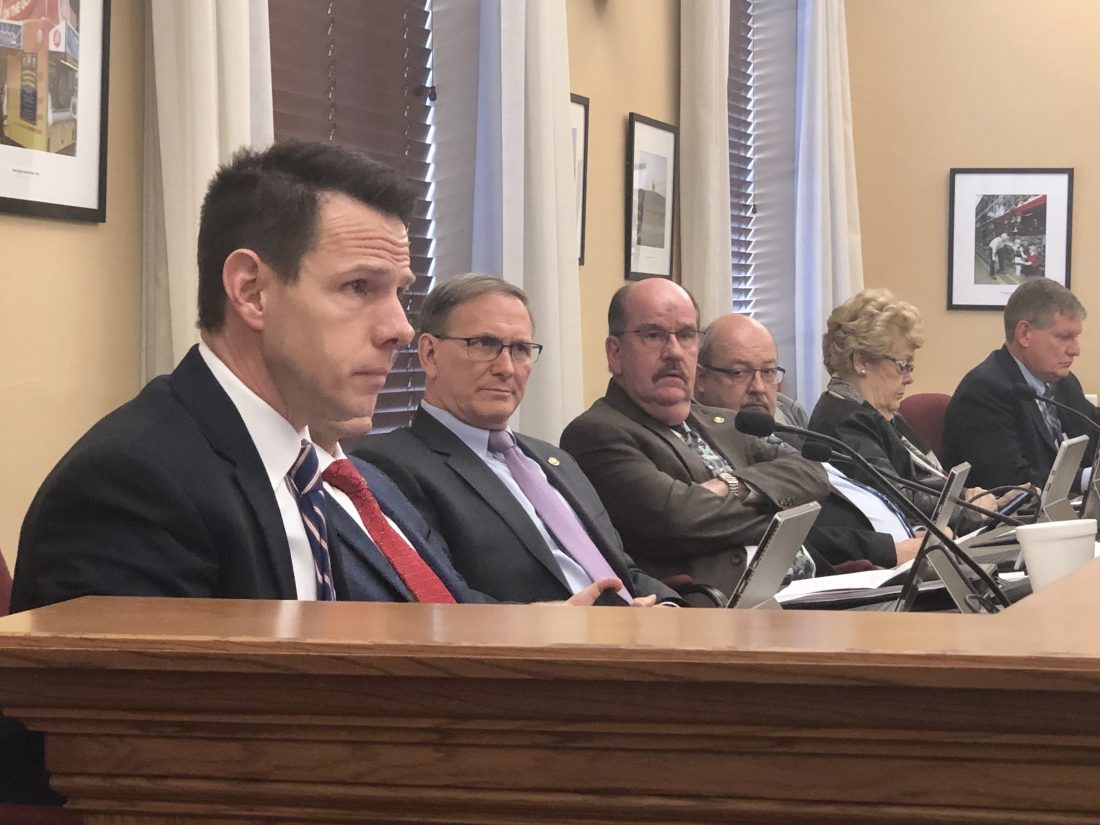
QUESTIONS RAISED — State Sen. Bill Ihlenfeld, D-Ohio, raises questions about the price of a severance tax cut for steam coal during a Senate Finance Committee meeting Wednesday. -- Steven Allen Adams
CHARLESTON — Two bills that would put a financial hole in the tax revenue starting next fiscal year were taken up by the Senate Finance Committee Wednesday afternoon.
House Bill 2673 would exempt low-producing oil and natural gas wells from paying severance taxes, with that money instead going to a fund to plug abandoned oil and natural gas wells. House Bill 3142 would lower the severance tax rate for steam coal over three years.
The Senate Finance Committee amended HB 3142 to change how the severance tax is reduced. The committee amendment spreads the 2 percent decrease over three years, from 5 percent to 3 percent by fiscal year 2022. Fiscal year 2020 would drop to 35 percent of the 2 percent, fiscal year 2021 would drop to 65 percent of the 2 percent, with the full 2 percent coming off in fiscal year 2022.
The House version passed last week would have reduced the severance tax on steam coal, also known as thermal coal, from 5 percent to 4 percent in fiscal year 2020 and 3 percent in fiscal year 2021.
The finance committee amended in the provisions of House Bill 2829, which eliminates the severance tax on limestone and sandstone. The bill also removes any prohibitions on coal-producing counties regarding what they use their portion of the severance tax revenue on.
Steam coal, burned in power plants for electricity, is primarily mined in the northern part of the state. According to SNL Energy, the price for Northern Appalachia coal as of March 1 was $70 per ton compared to $38 per ton in the Illinois Basin and $12 in the Powder River Basin.
Republican senators supporting the bill said that HB 3142 could help make West Virginia’s steam coal more competitive with other markets. They also argued that it could lower electric utility prices in the state.
“The more we can support the businesses that generate revenue, the better off this state is,” said state Sen. Eric Tarr, R-Putnam. “We still have coal-fired plants in West Virginia.”
“I took economics in college and the basic backbone of all economics is the supply and demand curve that tells you if the price goes down, demand goes up and vice versa,” said state Sen. Chandler Swope, R-Mercer.
Not all senators were impressed. State Sen. Doug Facemire, D-Braxton, questioned the economics behind the severance tax cut numbers.
“Do we actually think that’s the best use for our money,” Facemire asked. “The natural gas industry in the last three years has seen some of the lowest rates that we’ve had in over 30 years in the industry. Not one time did they come down here and ask for corporate welfare from the state tax payers to help bail them out.”
Combined, both bills would put a $37 million hole in the fiscal year 2020 revenue projections. The coal severance tax cut as passed by the House and amended by the Senate would reduce revenue by $20 million in its first year. The oil and natural gas severance tax cut would reduce revenue by $16 million. The elimination of the limestone/sandstone severance tax would reduce revenue by more than $1 million.
“I just don’t know that we can afford this,” said state Sen. Bill Ihlenfeld, D-Ohio. “We’re doing things to help this industry. I know it’s struggling. I want to see coal miners go back to work…but I don’t think when you do the cost-benefit analysis that the numbers work here. This is just more than we can afford now.”
HB 2673 would exempt owners from paying severance taxes on oil wells that produce between 10 barrels and 1.5 barrels of oil or less per day and natural gas wells that produce between 60,000 cubic feet and 5,000 cubic feet or less of natural gas per day. Instead, those monies would be deposited in the Oil and Natural Gas Well Plugging Fund.
According West Virginia Surface Owners Rights Organization, 4,000 oil and natural gas wells are considered “orphaned,” having been abandoned for so long that the wells no longer have a responsible owner. Another 8,000 wells still have owners and are bonded but haven’t produced oil or gas for 12 months.
Both bills move to the full Senate.
Local News
Starvaggi Drive area boil order lifted
WEIRTON - The Weirton Area Water Board has lifted the boil order for the area of Starvaggi Drive, effective at 7:40 ...
Zatezalo, Viola face off for District 2 Republican nomination
WEIRTON – The battle between a long-time incumbent and a political newcomer is the lone contested race for ...
Kevin Flanagan wins republican primary Belmont Co. Common Pleas Judge
MARTINS FERRY — Belmont County Prosecutor Kevin Flanagan of Bellaire defeated Michael P. McCormick of Bethesda in ...
Ohio Valley School Districts Keeping An Eye On Rising Fuel Costs
Vannest pleads guilty to terrorizing ex-wife, family member in 2024