
Attempt to gut Senate Republican property tax plan narrowly fails
Trending
CHARLESTON -- An attempt by the Democratic minority in the West Virginia Senate to limit a joint resolution to only lower or eliminate the property tax on vehicles failed Friday by a slim margin.
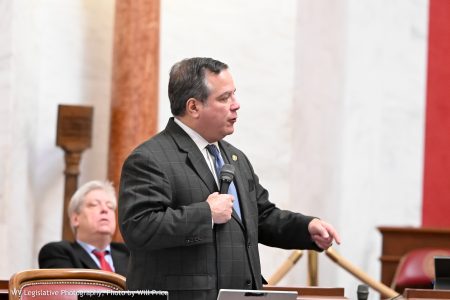
Sen. Mike Romano, D-Harrison, introduced an amendment Friday to Senate Joint Resolution 9, authorizing the Legislature to eliminate or lower the ad valorem tax on motor vehicles and any other tangible personal property.
The resolution would remove language from the state Constitution requiring uniformity in taxation. The joint resolution would give the Legislature the authority to repeal the business and inventory tax on manufacturing machinery and equipment, as well as property taxes on certain vehicles and all-terrain vehicles, trailers, and other categories of commercial vehicles that cross state lines.
“My amendment would bring a tax cut to the middle class, to working West Virginians, to regular people,” Romano said. “It will make their lives better and it will make our economy better, because when we put money into the hands of working people, they spend it in our local economies.”
Romano’s amendment would have limited the joint resolution to just motor vehicles. The amendment failed 17-15 with two absent. State Sen. Sue Cline, R-Wyoming, was the lone Republican joining Democrats to vote yes on the amendment.
Romano said SJR 9 would rip a large hole in the budget. According to estimates by the Senate Finance Committee, the six-year phase out of the property taxes in SJR 9 would costs the state $300 million in tax revenue -- mostly for county governments and school systems. Of the $300 million in lost tax revenue, $200 million would be made up through a related bill -- Senate Bill 837, which includes a 0.5 percent increase in the sales tax and increases in tobacco taxes.
The remaining $100 million would be made up with budget cuts and possible increases in tax revenue from other sources should businesses choose to expand or be enticed to come to West Virginia. Romano said past tax decreases and phase-outs over the past decade have not resulted in substantial business growth, while the same time period shows major population losses in the state.
“This is a tremendous tax cut we are talking about in this amendment...not only for the counties and the municipalities in this state, but also the state budget,” Romano said. “We’ve tried to do many things to bring businesses over the mountains and into the Mountain State. Needless to say, no matter what we do for business, it just hasn’t brought to us the benefits we always believed it would.”
Senate Judiciary Committee Chairman Charles Trump, R-Morgan, said the Legislature should have the authority to reduce or eliminate all kinds of property taxes instead of being limited to just motor vehicles.
“Machinery equipment and inventory that’s owned or used by people or businesses in the operation of their businesses should be eligible for tax relief should the Legislature, at some point, decide to do that,” Trump said. “The resolution before us is to give the voters, the citizens of West Virginia, the chance to decide if they would like to have the Legislature have the authority to reduce their taxes or eliminate taxes on all tangible personal property.”
SJR 9 will be on third reading Monday. The joint resolution requires a two-thirds vote, 23 out of 34 senators, to pass the Senate and 67 out of 100 members of the House of Delegates before being put on a special election ballot for voters to decide. SB 837 also is on third reading Monday and only takes a simple majority to pass, but will only become effective if SJR 9 is adopted.
(Adams can be contacted at sadams@newsandsentinel.com)