
Sharing an Easter tradition with intricately decorated eggs
Trending
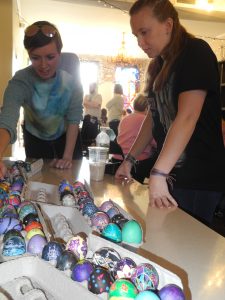
STEUBENVILLE -- While 32 giant hand-painted Easter eggs are displayed in many places in the city, about 60 area residents had an opportunity to create their own smaller versions by carrying on an Eastern European holiday tradition hundreds of years old.
Therese Nelson, one of many artists behind the large imitation eggs displayed in storefronts and elsewhere through May 2, instructed visitors to Leonard's Coffeehouse Saturday in decorating real eggs Ukrainian style.
Nelson explained Ukrainians and other Orthodox Christians abstaining from meat and dairy products during Lent found a festive way to use eggs hatched by their chickens during that time.
After poking a hole at one end of an egg and draining the yolk through it, they dipped a writing tool called a kistka into hot wax and used it to inscribe on the shells a variety of images and shapes.
The technique is similar to using a crayon to draw or write on a boiled egg before dipping it into a cup of water tinged with food coloring. But because a much finer wax tip is used, a more intricate design can be created.
Nelson said in ancient times, it was common for Christians in the Ukraine to incorporate a cross, as a symbol of Christ, as well as flowers, grass, waves and other elements of nature into the designs.
"Eggs have been a symbol for Easter always," she said, adding the spherical shape of one has symbolized the cycle of life and especially the life, death and resurrection of Christ.
Nelson said even the colors represented certain things for people of various cultures. For some, red symbolized hope as it served as a reminder of the blood shed by Christ for everyone's sins, she noted.
While pastel colors are common among today's Easter eggs, Ukrainians created brightly shaded hues using dyes derived from natural sources such as onions, for purple and red, or plants for green, she said.
Nelson added a household might decorate as many as 60 eggs during Lent.
The delicate pieces of art are known in the Ukraine as pysanky, from a Ukrainian word meaning to write or inscribe. But the tradition also was followed in other Eastern and Central European countries.
Kristin Grishkevich Wagstaff of Wellsburg said she enjoyed learning to decorate the eggs because it's part of her heritage.
"I had a great-aunt who made them. We could never touch her eggs. Now I know why," she said.
Wagstaff was accompanied by her daughter, Sarah, and Sarah's mother-in-law, Bonnie Myers-Toward of Saxonburg, Pa., who said it was nice that such events were being held to attract people to the city.
(Scott can be contacted at wscott@heraldstaronline.com.)