
Trending
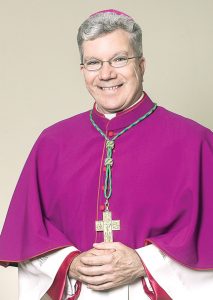
Monforton
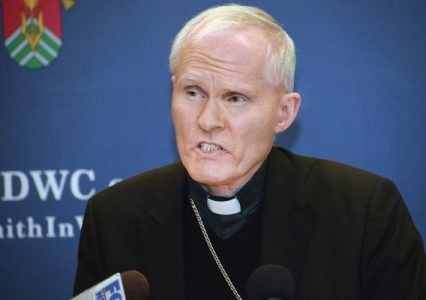
Brennan
WHEELING -- A recent discussion within the Catholic church in the United States has sparked discourse about whether communion can be withheld from parishioners due to their beliefs. However, local bishops say that to interpret their doctrinal discussion as a political stance is missing the point.
Earlier in June, the U.S. Conference of Catholic Bishops released an outline on the pastoral theology of the sacrament of the eucharist. At the time the document was released, questions arose in its wake about whether individual bishops could choose to withhold communion, particularly to pro-choice individuals. The discussion extended to President Joe Biden, the second Catholic to hold that office.
The bishops voted 168-55 in favor of drafting the statement, with six bishops abstaining from the vote.
Bishop Mark Brennan of the Diocese of Wheeling-Charleston said that the conference's vote was not meant as a punitive political action or a political statement at all. Rather, the outline was drafted in response to a perceived weakening of the Catholic faith.
"We face a great challenge to reverse (the) weakened faith of many Catholics in the real presence of Christ in the eucharist -- to revive their faith that in Holy Communion they actually receive, contrary to material appearance, the body and blood of the Lord. Without that faith, it is questionable whether a Catholic receives the spiritual benefit of the sacrament," Brennan said.
"For this reason, the U.S. Bishops will launch a Eucharistic Revival in 2022. The one-and-a-half-page outline of a pastoral theology of the Eucharist voted on by the bishops last week, responding to the relatively new situation in our church, will undergird our diocesan, parish and national effort in the eucharistic revival project. The chair of the committee on doctrine, which will develop the document, assured us it will not be singling out any individual Catholics for rebuke."
Similarly, Bishop Jeffrey Monforton of the Diocese of Steubenville said he felt that the key takeaway from the bishops' document was a spiritual one, not a political one. Monforton pointed to declining spiritual emphasis among Catholics on communion, which goes hand-in-hand with declining church attendance.
"This document should underscore the weight, the treasure that eucharist is in the church. In the Catholic church, the eucharist is the source and summit. ... Back in 2019, there was a Pew (Research Center) report that surveyed Catholics; nearly 70 percent of Catholics in the United States viewed the eucharist as a symbol, rather than the real body of Christ. ... It shows that there's a need for a catechetical moment. We're looking at just a little more than 30 percent of Catholics attending Sunday Mass -- I'm sure there's a relationship there," he continued.
Brennan said the document will be discussed, amended and voted upon by the bishops in November. The conference represents all Catholic bishops in the country.
Brennan said he did not anticipate that the recent discussion would impact church attendance. However, he wanted to impart what the action from the council actually represented, rather than the conclusions people may have jumped to, chiefly, that it calls for a renewed understanding and enthusiasm for communion, more than anything else.
"Those Catholics need to step back and see what our vote did not do. It did not condemn anyone. Also, Catholic teaching on doctrine and morals is supposed to play (a) constitutive role in the formation of a Catholic conscience. Personal convictions have to be modified if they conflict with defined teaching," he said.
"... People go to Mass because of the Lord. They relate well in most cases to their parish priest. A vote by bishops on a document will have little to no effect on them."
Monforton added that he hopes the document will provide guidance for Catholics, and bring them back to their churches with renewed purpose for those who have lapsed in church attendance.
"This document is, I think, a long time coming, and I hope it does provide, at the very least, a reversal for people who no longer go to church," Monforton said. "Whether it's that the church is no longer seen as important to them, or the scandals we've had to contend with, but I certainly hope and pray that it has that effect."
Monforton said that while "life is full of politics, and you can't avoid it one way or the other," it was not the intent of the bishops to make the matter of communion a political flashpoint. Rather, he hopes that the faithful will be mindful of the teaching of St. Augustine to heart -- "When you receive the eucharist, become what you receive."
He hopes that the renewed emphasis on communion will call for people to re-examine their own beliefs and to live their lives in a spiritual manner, aligning themselves toward the church.
"This document should be a spiritual enabler for all of us to delve into our own conscience," he said. "That's not to say to be Republican, Democrat, Green Party, that doesn't matter to me. What matters to me is that we look within ourselves to realize that it's not so much, 'Do we have a right to the eucharist?' but instead, 'Is it right for us to receive the eucharist?'
"We're all fallen individuals, we're all sinners -- I go to confession like everybody else," Monforton added. "The question is, are we united with the body of Christ and the church? To receive the eucharist is a sign of unity. ... Do we conduct ourselves consistent with who we receive at Mass?"
Monforton opined that there were a number of transgressions which could preclude communion, but that they were not limited to the scope of being pro-choice.
"There are grave sins out there, and they constitute a lack of charity, a break of friendship with God. Obviously one of the words that came up more than once was abortion, also euthanasia, but there are serious, grave sins as well, (such as) racism, and human trafficking."
Monforton lamented that while the conference's document consisted of three parts -- the mystery and sacrifice of the eucharist, the celebration thereof, and what that means to worshippers as people, especially outside the context of church. However, the public discourse on the document, he said, was laser-focused on the third part and its consequences, which he feels gives it outsized weight compared to the whole context.
"The third part took up most of the discussion, as well as most of the Catholic media out there," he said. "I think there were two bishops' conferences that happened a week ago -- one that I attended, and one that a lot of the Catholic press reported on."
Looking forward, Monforton said he had hope for the future congregants of the Catholic church, recounting a recent visit he made to an elementary school, where numerous second-graders, preparing for their first communion, were well versed in doctrine.
"On the lighter side of things, the second-graders at the Catholic schools in Steubenville know more about the eucharist than 70 percent of Catholics," he said. "That shows potential, that shows the future. If the children's parents don't go to church, sometimes you need to evangelize the parents through the children.
"I'm grateful that, with this document, that we voted on it, and we're moving forward. There's going to be a lot of dialogue, and that's been encouraged by Cardinal (Luis) Ladaria, in Rome, in a letter to the bishops," he added. "That's extremely important -- that's how the councils operated. ... It centers on that dialogue, not coercion. People have seen that firsthand."