
W.Va. COVID cases drop to December levels
Trending
CHARLESTON - The number of active COVID-19 cases in West Virginia have dropped to levels not seen since the end of last year, but hospitalizations remain above delta peak levels.
According to data from the state Department of Health and Human Resources, active COVID-19 cases - caused by the spread of the more contagious but milder omicron variant - dropped from a peak of 21,039 on Jan. 15 to 11,116 active cases as of Thursday - a 47% drop in active cases.
The total number of active cases during the omicron surge never reached the 29,744 delta variant peak in September 2021 which also exceeded the 29,257 active cases during the first COVID-19 wave in January 2021. According to the County Alert System color-coded map, only 16 out of 55 counties are in the red for either high infection rates or high percent of positivity.
Dr. Clay Marsh, the state coronavirus czar, said the overall rate of infection in West Virginia has decreased below 1, meaning that the chances of one person infecting another person with COVID-19 has reduced.
"It looks like we've seen the peak of the omicron cases. Now we believe that is starting to recede," Marsh said during Friday's COVID-19 briefing. "We see that the Rt values remain under 1. Today's is .94, and the number of average daily cases has gone down over the last four or five days as well as the percent positive has gone down."
However, hospitalizations during the omicron surge remain higher than the first surge of the delta surge or the first COVID-19 surge at the beginning of 2021. Total hospitalizations in West Virginia for COVID-19 infections was 1,061 as of Thursday, down from a record 1,097 hospitalizations Wednesday.
The Wednesday hospitalization peak was 8% more than the 1,012 hospitalization record during the September delta surge and 34% higher than the 818 hospitalization record during the first surge back in January 2021. According to inpatient bed utilization data compiled by the U.S. Department of Health and Human Services, 86.5% of the state's inpatient hospital beds are in use, with 1,242 beds - 22.2% of inpatient beds - are in use for COVID-19 patients with 59 hospitals reporting to HHS.
Despite the spike of hospitalizations, serious COVID-19 infections requiring the use of intensive care unit beds has increased but it hasn't spiked. DHHR reported Friday a total of 233 ICU cases, which is 21% below the September ICU bed peak of 296 beds, though it is still 6% more than the 219 ICU cases during the January 2021 COVID-19 surge. HHS reports that 83.7% of the state's ICU beds are in use, with 224 beds - 37.5% of ICU beds in West Virginia - are being used for COVID-19 patients.
"We would anticipate hospital numbers will be the next focus for us," Marsh said. "In general, we have seen hospitalization numbers continue to rise after the peak of cases in other countries. Also, we know after that follows increased numbers of people who die from COVID-19."
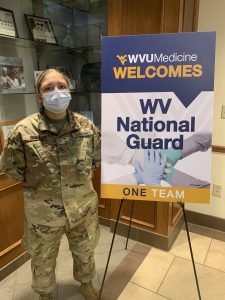
Gov. Jim Justice said Friday that more than 290 members of the West Virginia National Guard are
assisting 34 different hospitals and medical facilities with manpower due to the strain of the increased COVID hospitalizations combined with staffing shortages. State officials are also working with the U.S. Centers for Medicare and Medicaid Services for a waiver for healthcare workers from the federal COVID-19 vaccine mandate due to concerns over hospital staffing.
"I worry an awful lot about our hospitals," Justice said. "On our call yesterday with the folks from D.C. asking them for a waiver with our rural hospitals...what they very well can do is extend the timelines and work with us on the percentage of folks who are vaccinated at the hospitals and give us leeway to where we don't have to end to terminate someone we desperately need in a rural hospital."
(Adams can be contacted at sadams@newsandsentinel.com)