
WVU researchers see potential for growth in region
Trending
WEIRTON -- Economic development officials, for years, have touted the potential they see in the Ohio Valley, and now researchers from West Virginia University agree, though they warn some obstacles remain.
"It has been a real roller coaster in West Virginia the last two years," explained John Deskins, director of the Bureau of Business and Economic Research at WVU. "In a lot of ways, we're on the cusp of real change."
Much of Wednesday's presentation, held at the Lauttamus Event Center and sponsored by WVU, Lauttamus Communications and Security, the Weirton Area Chamber of Commerce and the Business Development Corp. of the Northern Panhandle, was focused on the effects of the COVID-19 pandemic on the state and the economic recovery thus far.
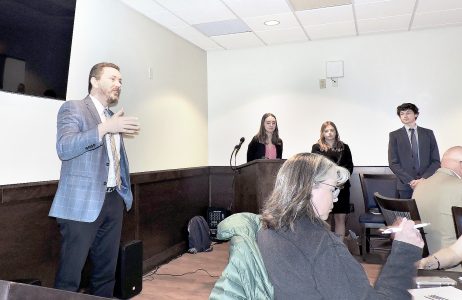
With research by WVU economics students Mackenzie Hill, Ben Sbei and Isabelle Dallaire, it was noted payrolls for local businesses - specifically in Hancock, Brooke and Jefferson counties - have recovered to approximately 98 percent of pre-pandemic levels.
The report noted some struggles in local manufacturing, including the closing of Mountain State Carbon in Follansbee, but pointed to growth opportunities in recent years, such as the 2019 opening of Pietro Fiorentini in Weirton, plans for the Port of West Virginia in Follansbee and Fanti USA in Weirton. Natural gas continues to have an impact, the students noted, with Brooke County ranking among the highest-producing counties in West Virginia for oil and natural gas liquids.
In addition, education and health services remain an integral part of the local economy, providing for more than one-fifth of local jobs.
Consumer spending, during the pandemic, shifted from dining and services to the purchase of goods, with most service-based venues of in-person entertainment and dining seeing some recovery but still below pre-pandemic employment levels.
Unemployment overall has mostly followed state and national trends, the students explained, peaking at more than 17 percent in April 2020 and now standing at between 5 and 6 percent. Those numbers, however, do not reflect the loss of participants in the labor force through retirement, relocation and other means in recent years.
Overall, the report indicates expectations of moderate growth with employment increases of 0.5 percent annually through 2026, although inflation and supply chain issues could continue to present obstacles to opportunities.
Marvin Six, executive director of the BDC, pointed to business and infrastructure investments made in the region in recent years, including $38 million in local road, water and sewer upgrade projects, a recently announced business project which will see a $30 million investment in a vacant building, and current work to apply for $20 million in grants and other funding for facility improvement projects.
"You can see the impact that would be in the communities if we landed just two of them," Six said.