
‘Making the path better for those who follow’
Orthopedic trauma surgeon with local ties presented first ‘She for She’ mentoring award
-
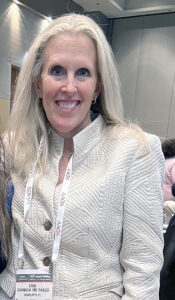
- HELPING OTHER WOMEN — Steubenville native Dr. Lisa Cannada is an orthopedic trauma surgeon who lives and practices in Jacksonville, Fla., and recently received the inaugural Ruth Jackson Orthopaedic Society’s new annual “She for She” award as “a supporter for other women in orthopedics, mentoring and empowering females at all stages of their careers to achieve their personal and professional goals.” — Contributed
-
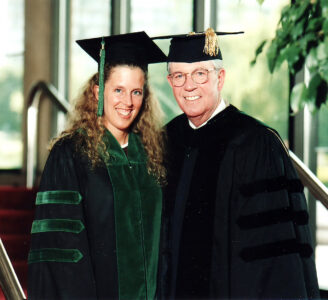
- When Lisa Cannada graduated in 1996 from the University of Maryland School of Medicine, she was hooded by her father and mentor, the late Dr. John W. Metcalf Jr., a 1953 graduate.. — Contributed
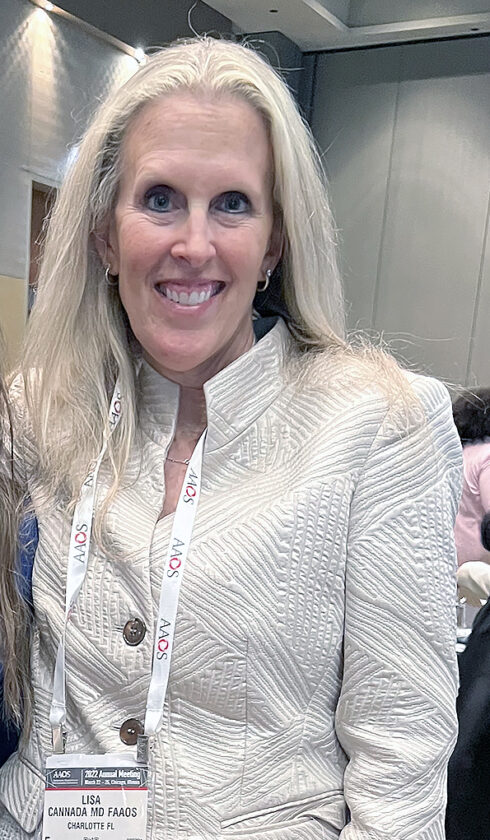
HELPING OTHER WOMEN — Steubenville native Dr. Lisa Cannada is an orthopedic trauma surgeon who lives and practices in Jacksonville, Fla., and recently received the inaugural Ruth Jackson Orthopaedic Society’s new annual “She for She” award as “a supporter for other women in orthopedics, mentoring and empowering females at all stages of their careers to achieve their personal and professional goals.” -- Contributed
JACKSONVILLE, Fla. — On this Labor Day weekend, Steubenville native Dr. Lisa Metcalf Cannada, an orthopedic trauma surgeon with the Novant Health Orthopaedic Fracture Clinic/Hughston Clinic in Jacksonville, Fla., knows the importance of being a mentor and having them.
And that makes being the first recipient of the Ruth Jackson Orthopaedic Society’s new annual “She for She” award something extra special.
Cannada, the daughter of Theresa Metcalf of Steubenville and the late Dr. John W. Metcalf Jr., was presented the inaugural award — the creation of which was announced in 2021 — during the American Academy of Orthopedic Surgeons’ annual meeting held in March in Chicago.
The “She for She” Award recognizes a female orthopedic surgeon who serves as a supporter for other women in orthopaedics, mentoring and empowering females at all stages of their careers to achieve their personal and professional goals, according to information provided by Cannada, a 1981 graduate of Catholic Central High School.
The six requirements for the award winner are advocating for all women in orthopedics; providing support, mentorship and sponsorship for multiple women; inspiring women to strive for stretch positions; promoting work/life balance; encouraging camaraderie among women; and walking side by side with female colleagues, lifting others up.
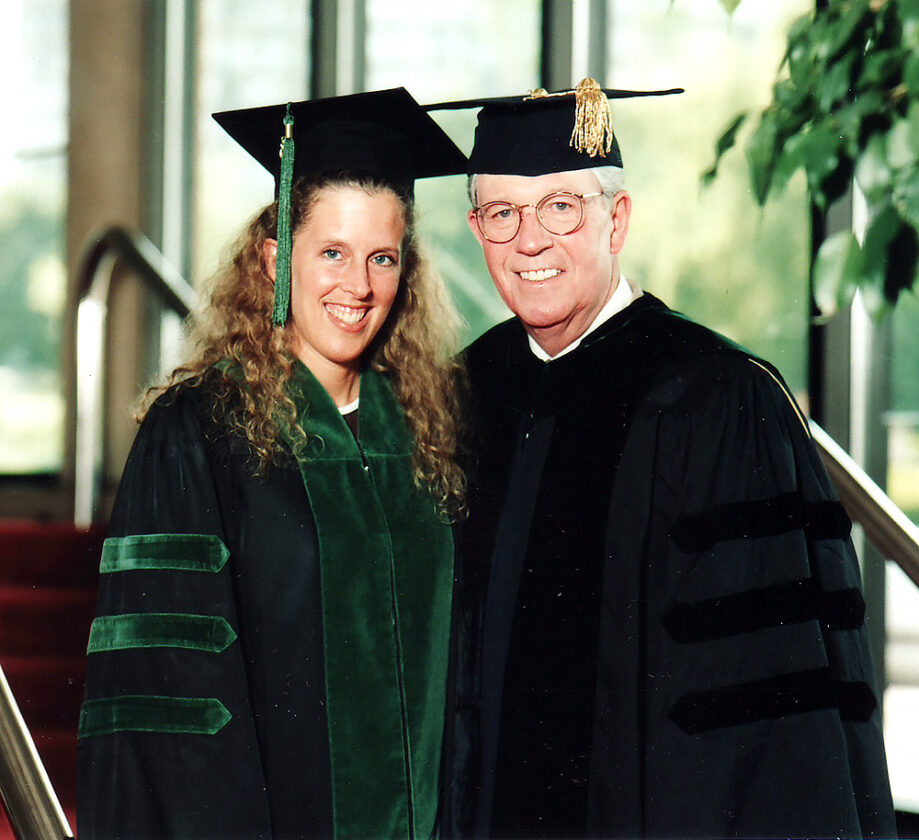
When Lisa Cannada graduated in 1996 from the University of Maryland School of Medicine, she was hooded by her father and mentor, the late Dr. John W. Metcalf Jr., a 1953 graduate.. -- Contributed
“I was humbled to receive this award,” Metcalf communicated in response to e-mailed questions, noting the Ruth Jackson Orthopaedic Society will be celebrating its 40th anniversary in 2023.
Aware in advance that she would be receiving the award, Cannada was one of nine individuals under consideration for the honor and stood apart from the rest with 10 letters of nominations from former medical students, residents and practicing physicians whom she has helped through the years.
“It means a lot to me to be recognized for supporting other women and advancing their career,” Cannada commented.
“To me it’s the most important award I have ever received.”
The written words of the nominators paint a picture of Cannada’s mentoring impact.
Wrote Dr. Emma Dwyer, “Dr. Cannada has mentored countless medical students and residents over the years — instilling in us a sense of self-respect and respect for others. She has consistently believed in us, especially when we may not have always believed in ourselves… Orthopedic surgery has been able to attract talented, female medical students because of the leadership Dr. Cannada has provided to the field.”
Dr. Lena Josifi described how she was dealing with some potentially career altering and heartbreaking issues in residency. “Dr. Cannada immediately made herself available and guided me when I was lost, hurt and at my lowest point. When everyone turned their back and did not want to get involved, she stepped in. She routinely called and texted to check up on me and to ensure appropriate action was being taken and progress made. She encouraged and uplifted me. She made me believe in myself and gave me the strength to fight for what I had earned and what I deserved.”
Dr. Jessica McMichael noted: “In the spring of 2013, I was a new attending, working hard on our trauma service, and I was seven months pregnant. I was struggling. Dr. Cannada was the only person who tried to alleviate the physical demands of our schedule. She offered to take all my calls without solicitation. She asked for nothing in return. She only cared about my health and the safety of my baby.”
Third-year Penn State medical student Jasmine Lee wrote: “When I entered medical school, I was in complete culture shock. Having grown up in a lower socioeconomic and more racially and culturally diverse area, I had a difficult time relating to most of my peers, and despite my efforts to continuously show up and find ways to relate, it simply felt as though I did not belong. This discomfort worsened around my peers who also wanted to go into orthopedic surgery. Many of them had been athletes and that had sparked their interest in orthopedics. At the time, I could not stop thinking about how, growing up, my school district did not have any sports teams, and my family did not have the financial or social means of helping me join a sports team despite my desires. In medical school, and especially around those who were interested in orthopedics, people around me looked differently, thought differently and behaved differently than in any other environment I had been in.
“Dr. Cannada,” Lee continued, “was the one connection to orthopedic surgery that gave me the faith I needed in myself to take actual steps toward the field of my dreams. She helped me feel like I belonged. Before I could dare to imagine myself becoming an orthopedic surgeon, she had complete faith that I would become one.”
Second-year Brown medical student Patricia Rodarte describes herself as a Latina and first-generation medical student.
“Dr. Cannada,” Rodarte wrote, “was the first female orthopedic surgeon I met, and the only woman I have worked with to date. In every patient interaction, Dr. Cannada gave me a place on the care team by introducing me as a medical student and future orthopedic surgeon. I admired the way she commanded every room with respect and compassion, something which is difficult to do when women are often taken less seriously, or disregarded, in medical settings. In the operating room, Dr. Cannada made sure I was an active participant by asking me questions, explaining technique and allowing me to scrub into and assist in surgeries. More importantly, I learned how to provide patients with optimal care through kindness, knowledge and skill from her, even when she was working with patients in vulnerable states due to orthopedic trauma.”
Added Rodarte, “Dr. Cannada embodies all that this award represents and emanates love for her profession through mentorship. She has paved the path for me and many to follow.”
Third-year NYU Langone resident Tomi Lanre-Amos stated: “It is not hyperbole to say that Dr. Cannada has fundamentally changed the course of my life. I met her when I found myself struggling in residency and in dire need of mentorship. We connected through the Women in Orthopedics Facebook group, and I will never forget our first Zoom meeting. I logged on, not really knowing what to expect, and she showed up with a big, inviting smile on her face. We spent about 90 minutes together on what would be the first of many Zoom calls. I confessed to her the difficulties I had been having, and she listened with complete empathy and without judgment. Then, she said with a resolute firmness that she was going to help me turn things around, and I truly would not have made the strides I have in the last few months without her. The extent of her commitment to my learning still continues to amaze me. We meet on Zoom for one hour every week to discuss either my consults, trauma cases from the week or most recently, the topic of my program’s weekly fracture conferences. I will never forget the moment toward the end of my second year when I answered a question correctly in fracture conference, that the R3 who was asked first did not know the answer to, solely because I had reviewed the case with Dr. Cannada a few days prior.”
While Cannada has received other awards and recognition, the ones that mean the most to her are for recognition for teaching and mentoring “because that’s what I want my legacy to be — mentoring and education, making the path better for those who follow.”
Growing up, Cannada knew she wanted to do something with sports and thought about becoming a physical education teacher.
But Cannada was always surrounded by two doctors — her father, Dr. Metcalf, an OB/GYN, and her maternal grandfather, Dr. John Smarrella, a general practitioner. Both had served as Jefferson County coroner.
“In fact, I got to spend time following both, and I began to pique my interest in medicine,” Cannada commented. After high school, she headed to Ohio University.
“I went to college and was an athletic trainer. I was working with athletes and also working with orthopedic surgeons as we would prepare the athletes for the games by taping them and then evaluate their injuries and work on their rehabilitation. It is when we are evaluating their injuries and helping them in the recovery from injury and surgery that we work closely with orthopedic surgeons. Oftentimes, we got to watch the exam and review the studies with the orthopaedic surgeon. It was then I became very interested,” she explained.
Cannada’s college years from 1981-85, however, were at a time when there was “very little encouragement for women in surgery, especially orthopedic surgery as women comprised less than 3 percent of our practicing orthopedic surgeons at that time.”
After earning her bachelor’s degree in health education, Cannada completed a master’s degree in exercise and sports sciences while working as an athletic trainer at the University of Arizona.
“It was at that time I met my future husband as he was an athlete,” Cannada noted of the guy she was treating for a sports injury. Jeff Cannada at the time was a world-class distance runner whose accomplishments included a gold medal in the 1991 Olympic Festival in Los Angeles. He qualified for the Olympic trials for 1992 but missed the opportunity after a fall on the ice during a Christmas visit to Steubenville.
“In my first year out of college while working as an athletic trainer, I worked closely with the orthopedic surgeons, and it was then I really felt like I could be one. I would evaluate athletes and would accompany them to the orthopedic surgeon, and I knew this was what I wanted to do. However because I was an education major, I had to go back and take all the premed classes. My husband — he was my fiance at that time — and my parents encouraged me to go back,” Cannada continued her thoughts on how she had decided what career path to pursue.
“I was very fortunate in that before I went to medical school I knew I was going to be an orthopedic surgeon due to me being an athletic trainer and working with orthopedic surgeons,” Cannada explained. “While I was was the medical school at the University of Maryland, in my fourth year I did a rotation at the RA Cowley Shock Trauma Center, which is world renowned for trauma. It was then I knew, before I even started my residency, my goal was to become an orthopedic trauma surgeon. I love the fact that you don’t know how your day will be,” she said, noting how, a serious car accident, for example, can change the day’s schedule.
“I also love the ability to help people return to function after having fractures I repair. I love the fact that we have to collaborate closely with multiple other specialties in order to provide the optimum care for the patient,” she noted.
Cannada has been a practicing orthopedic surgeon for 21 years. “My passion is my work and that’s what makes it easy. I love what I do — seeing patients, the surgery, the teaching and being involved in leadership positions in orthopedic surgery organizations.”
That career contentment she credits in part to mentors.
“My mentors at home, of course, were my father, who had introduced me to his friends and medical school classmates so that I could talk about my career aspirations with them and also have shadowing opportunities,” she said.
“One of my first real mentors in orthopedic surgery was when I was in medical school. Dr. John Herzenberg was a pediatric orthopedic surgeon, and he taught our musculoskeletal anatomy class. I told him I wanted to be an orthopedic surgeon, and he said he would help me. He mentored me, and we worked on research together, and it resulted in my first presentation at national orthopaedic meetings and my first peer-reviewed orthopaedic publication,” she continued. “It had a profound, lifelong effect on me in research as I now have more than 180 publications and have authored multiple book chapters and books,” she added.
Mentoring has “definitely” played a role in her career, according to Cannada, who said she’s had different mentors for different phases of her career.
One of them is Dr. Mary O’Connor, president of the Ruth Jackson Orthopaedic Society for females and male allies. “She helped me in producing and co-editing the first RJOS Guide for Women in Orthopaedic Surgery,” she said.
Cannada believes in paying back and is no stranger to being a mentor and role model for medical students, residents and young practitioners in orthopedic surgery.
“The future of our organization — and profession — is only as good as those who are following behind. Thus I think it’s very important to pay back and be a mentor to others. To that end I have always made myself available to help people and provide advice no matter what phase of their career they are in,” she commented.
“In addition I’ve been fortunate in editing and producing books along these lines. I edited and produced the second edition of the ‘RJOS Guide for Women in Orthopedic Surgery’ and in July 2020 edited and produced the first ‘Medical Student Guide for Orthopedic Surgery,'” continued Cannada, whohas developed unique mentoring programs, including the Young Practioners Forum for the Orthopaedic Trauma Association and the OTA Women in Trauma Luncheon.
Another initiative Cannada said she is especially proud of is “Speed Mentoring.”
“At this we have tables with orthopedic leaders, and the attendees rotate around to tables with topics they are interested in. I have found many are interested in the non-surgical skills for career success which are not taught in training. Some of these topics include ‘finding your first job,’,’the view from the other side of the desk: Looking good in interview,” “being a leader in the operating room” and “work life balance’ to name a few.”
A day in the life of a trauma surgeon can be as unpredictable as it is exciting, according to Cannada. “You have your scheduled cases as many orthopedic trauma patients have multiple injuries and need staged treatment for these injuries. However, that can be interrupted when life-threatening or limb-threatening orthopedic injuries come in. Orthopedic trauma surgery is one of those specialties where your patients don’t pick you as they do for many elective orthopedics specialties such as sports, hand or arthroplasty. “Whoever is on call happens to be the one who will take care of you. I also have clinic where we see our patients in the postoperative period. I also have a small elective practice for fractures it do not heal it and complications arising from other injuries and surgeries. I really cherish the relationships I develop with the patients and the fact that we are able to restore and improve their life at a time when they didn’t expect to have anything happened to them. It’s amazing you could just be driving to work and your whole life changes in an instant with a car accident. Many times there are residents, students or advanced practice providers such as physicians assistants are part of our service. I have worked in Academic medicine most of my career and I have these trainees on my service to teach, lectures to give, research to complete and meetings to speak at,” she added.
Cannada said women represent 7 percent of orthopedic surgeons now and 15 percent of orthopedic trainees.
“It’s important to show other women that one can be successful as an orthopedic surgeon-regardless of gender and ethnicity. It is important we train surgeons who look like the patients they treat. It is important to show others women can be leaders in the field, be active in research and successful teachers. Women also need advice regarding relationships and having children. I have been married for 33 years and have a daughter who is senior in high school. It is important to me we be allies for other women — always trying to promote them so we can make a difference.”
Asked what she would like this article to most get across about herself specifically or women in general pursuing their goals and dreams, especially during Labor Day weekend and at a time when young women have or are heading off to college, Cannada responded, “You can do it. Find someone who believes in you. You do not have to take a traditional route to medical school. I got a master’s degree and started medical school at age 29.
“You can have it all. Break the glass ceiling and surround yourself with those who believe in you and support you,” noted Cannada, whose signature since her father’s death includes a tribute to him — 11/21/19 “My Dad, my hero, my inspiration.”
Local News
Belmont County bomb threat suspect’s case moved to Common Pleas Court

Two arrested in Brooke County on child neglect charges after 1-month-old’s death

Steubenville Educators Rising chapter going to nationals
Hancock commissioners to discuss opioid funding request
NEW CUMBERLAND — Hancock County commissioners are set to discuss a potential memorandum of understanding tied to ...
Morrisey finishes work on legislation with 12 vetoes, 10 bills not signed
Commissioners praise jail program’s early success
STEUBENVILLE — Commissioners celebrated the tangible gains recorded from a substance abuse program launched just ...