
Weather band dumped snow on narrow band of Ohio Valley
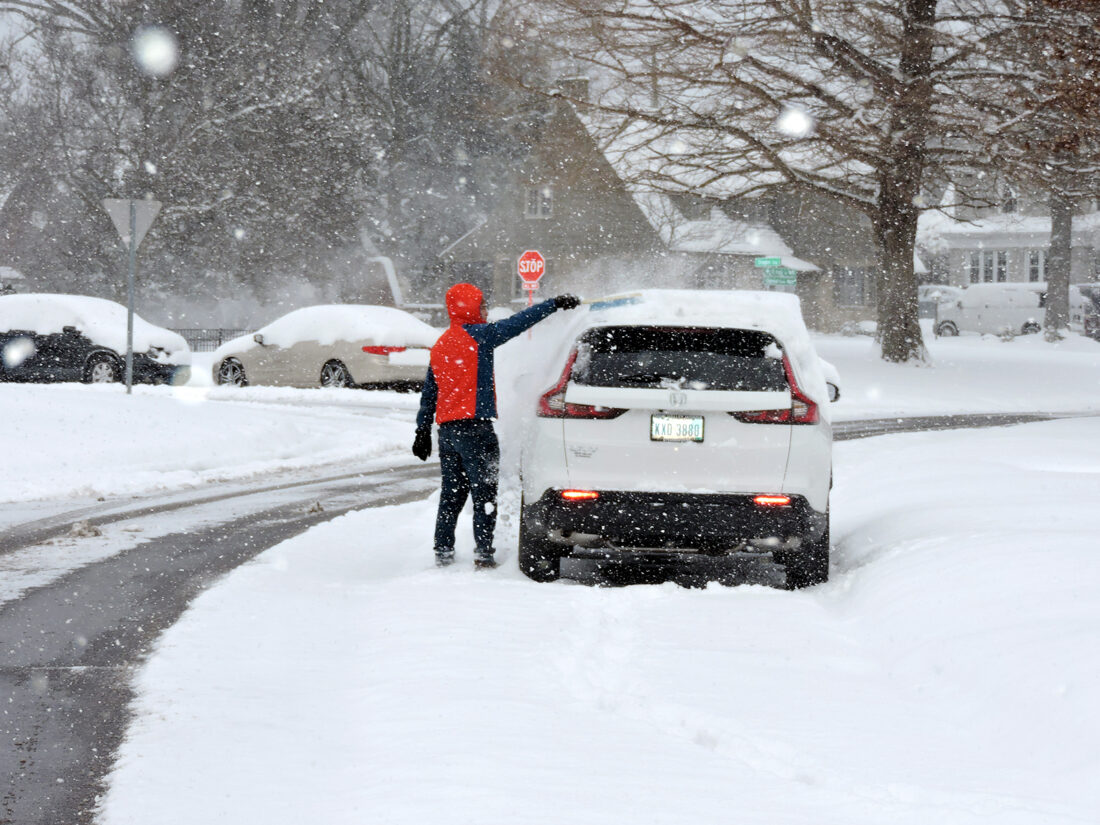
HEAVIER THAN EXPECTED — Clearing snow from his car on Granard Parkway while still more fell, Mario Huzovic of Steubenville was among many Tri-State Area residents who awoke Tuesday morning to find more of it on their vehicles and roadways than expected. The heavier spate of precipitation didn’t occur throughout all of the Ohio Valley, however, and may have been spurred by an isolated weather pattern originating from Lake Michigan. -- Warren Scott
Residents of some areas of the Ohio Valley preparing for Tuesday morning commutes found much more snow on their vehicles and local roads than expected.
Those in Steubenville, Follansbee and areas just south of those cities appear to have been the most affected, with as many as 6 inches of snow reported.
Liana Lupo, a meteorologist at the National Weather Service’s Pittsburgh office in Moon Township, said the source appears to have been a weather pattern originating from Lake Michigan.
Lupo said it’s unusual because weather in this region usually is influenced by patterns emanating from Lakes Erie or Huron.
She said the pattern extended farther west to east than it did north to south, resulting in the discrepancies in snow fall totals among neighboring communities.
“It’s quite incredible,” said Lupo, who noted many factors play a role in the weather from day to day.
While predictions for accumulation through New Year’s Day are more moderate, those planning to attend New Year’s Eve celebrations should take heed.
Following up to an inch of snow projected for Tuesday night, the National Weather Service predicted anywhere from an inch to 3 inches between 4 p.m. and midnight today.
Lupo said the temperature isn’t expected to reach higher than the mid-20s today while dipping into the mid-teens into the night.
She said dry conditions are expected to usher in the new year, with the thermometer expected to rise to about 20 degrees on Thursday and to about 30 degrees on Friday.
Lupo noted such temperatures are relatively low for this region at this time of the year, with the average high temperature on Jan. 1 in recent years in the upper 30s.
Local News

SNAP bans on soda, candy and other foods take effect in five states Jan. 1
Report: Increased use, diminished resources plague tobacco cessation efforts in West Virginia
CHARLESTON — W.Va. Gov. Patrick Morrisey has preached the need for healthier lifestyles for West Virginians since ...

Weather band dumped snow on narrow band of Ohio Valley
Small step taken in EGCC transfer to YSU
Mindful strategies for health resolutions
STEUBENVILLE — As the calendar turns to a new year, many area residents feel the pressure to overhaul ...
Local Briefs
Steubenville trustees to meet MINGO JUNCTION — Steubenville Township trustees will be reorganizing Friday, ...