Attorney General McCuskey prepares to defend W.Va. law protecting sports for biological girls, women at U.S. Supreme Court
-

- FOCUS OF CASE – Becky Pepper-Jackson, seen here with her mother Heather Jackson, has been fighting back since 2021 against the state’s ban on transgender girls competing in girls’ and women’s sports. — Photo Courtesy/ACLU-WV
-

- GOING TO WASHINGTON — West Virginia Attorney General J.B. McCuskey will make his debut at the U.S. Supreme Court next Tuesday when he defends House Bill 3293, the Save Women’s Sports Act. — Steven Allen Adams
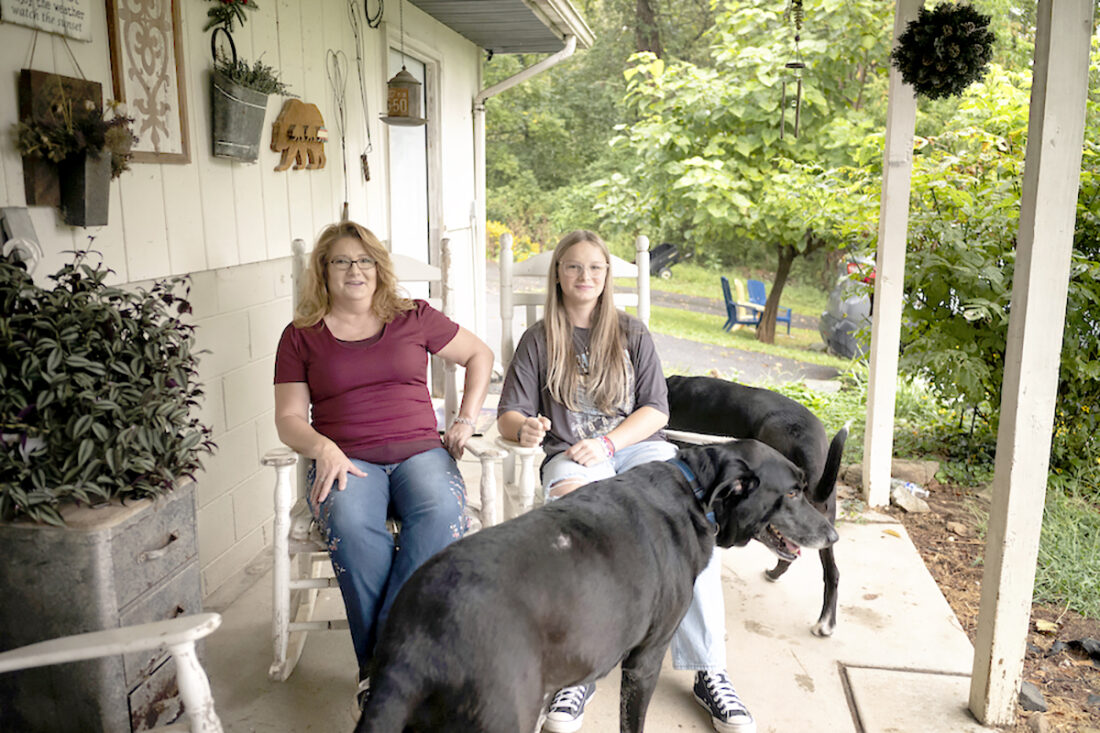
FOCUS OF CASE – Becky Pepper-Jackson, seen here with her mother Heather Jackson, has been fighting back since 2021 against the state’s ban on transgender girls competing in girls’ and women’s sports. -- Photo Courtesy/ACLU-WV
CHARLESTON — West Virginia Attorney General J.B. McCuskey and his legal team are getting ready to head to Washington, D.C., to defend the state’s law aimed at keeping transgender girls and women from competing with biological girls and women in public school and college athletics before the highest court in the land.
The U.S. Supreme Court will hear oral arguments Tuesday for two cases involving Idaho and West Virginia banning transgender girls and women from secondary school and college girls and women’s athletic programs.
House Bill 3293, passed by the West Virginia Legislature in 2021, requires student-athletes in middle school, high school and college to participate in sports that match the student’s sex assigned at the time of their birth. The law applies to sports regulated by the NCAA and other college interscholastic organizations. The law is now called the Save Women’s Sports Act.
After the U.S. District Court for the Southern District of West Virginia allowed the law to be enforced, the U.S. Fourth Circuit Court of Appeals overruled that decision, preventing the law from being enforced while the case was pending. The Supreme Court rejected an effort by then-attorney general Patrick Morrisey to appeal that ruling barring enforcement of the law while the case was pending, preventing HB 3293 from being enforced.
Becky Pepper-Jackson, a 15-year-old Harrison County high school cross country and track athlete who has identified as a girl since third grade and takes puberty-blocking medication, filed a lawsuit against HB 3293 in May 2021 shortly after the law went into effect.
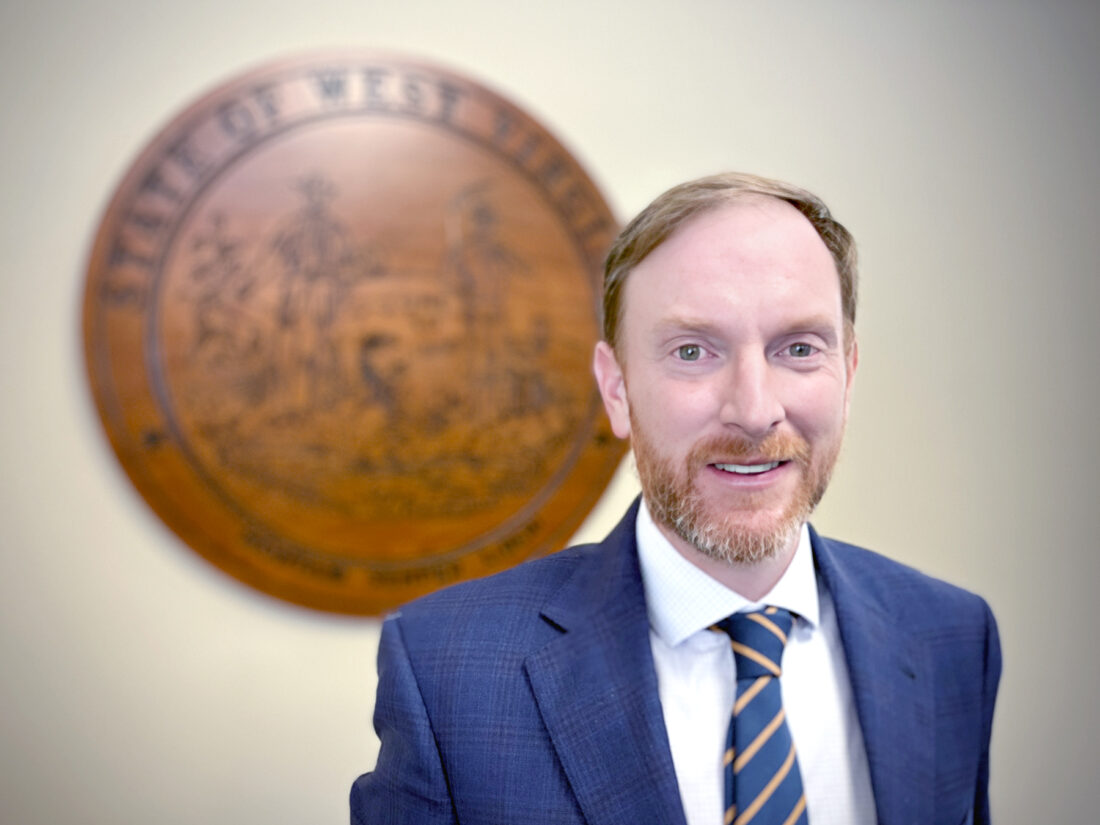
GOING TO WASHINGTON — West Virginia Attorney General J.B. McCuskey will make his debut at the U.S. Supreme Court next Tuesday when he defends House Bill 3293, the Save Women’s Sports Act. -- Steven Allen Adams
Attorneys for Pepper-Jackson – which include the ACLU-WV, Lambda Legal, and Cooley LLP – alleged that HB 3293 violated her federal Title IX rights, prohibiting the exclusion of students from education programs on the basis of sex, as well as her rights under the Equal Protection Clause of the 14th Amendment to the U.S. Constitution.
Attorneys with the ACLU-WV were not available for comment Thursday, but in a November press release, Pepper-Jackson said she simply wants the same opportunities afforded to her peers.
“I play for my school for the same reason other kids on my track team do – to make friends, have fun, and challenge myself through practice and teamwork,” Pepper-Jackson said. “Instead, I’ve had my rights and my life debated by politicians who’ve never even met me but want to stop me from playing sports with my friends.
“I know this case isn’t just about me, or even just about sports. It’s just one part of a plan to push transgender people like me out of public life entirely,” Pepper-Jackson continued. “I’m proud to stand up alongside my mom for what I believe and who I am and I want other transgender kids to know they aren’t alone.”
During an interview Thursday morning at his offices within the State Capitol Building, McCuskey discussed his legal defense of the Save Women’s Sports Act for what will be his first appearance before the Supreme Court as attorney general.
“The crux of this issue is our states are allowed to pass common sense legislation that delineates between biological sexes when it comes to athletic competition,” McCuskey said. “We think, and we’re fairly certain that we’re right, that this is noticeably constitutional and totally legal.”
McCuskey said West Virginia’s law is defensible, because it does not ban anyone from being able to play secondary or collegiate sports and does not discriminate based on sex.
“What our state did was create a system that is rational, that is enforceable, and that accomplishes the goal that they set out to do, which is to make sure that women and girls – people who are born women – have the opportunities to participate in athletics against only people that share their immutable physical characteristics,” McCuskey said.
McCuskey said the Title IX arguments being made by Pepper-Jackson’s attorneys do not hold up. The nearly 54-year-old landmark civil rights law passed by Congress in 1972 prohibits sex-based discrimination in schools and colleges.
“(Pepper-Jackson) believes that the gender that she has chosen is what is the delineating factor as to whether or not Title IX protects her rights,” McCuskey said. “We are saying that sex is the thing that delineates what happens under Title IX. There is no doubt, and there is no argument, that (Pepper-Jackson) is a biological male. And thus, we believe our position actually supports the underlying purpose of Title IX and that their argument actually erodes it.”
According to a 2015 study by espnW and Ernst and Young, 80% of Fortune 500 female CEOs played high school or college sports in their early years.
“What we’ve seen over the last 50 years is that Title IX has worked,” McCuskey said. “We’ve created Title IX, and Title IX has done what it’s set out to do, and it’s continuing to do that, which is to equal the playing field between men and women as it relates to opportunities in athletics and academics, which then produces people who have these incredible leadership skills and the ability to understand failure and how to understand success.”
President Donald Trump signed an executive order early in 2025 barring transgender girls and women who were born as males from participating in sports with biological females. The NCAA in early 2025 updated its policies to abide by Trump’s executive order, limiting competition in women’s sports to student-athletes assigned female at birth only. The International Olympic Commission also set a 2026 target to update its policies which could limit participation of transgender athletes in future Olympic competitions.
McCuskey said his two primary goals next Tuesday are to make the case to the justices of the U.S. Supreme Court that HB 3293 is constitutional and legal, and to provide guidance to other states that want to do similar laws like West Virginia’s and Idaho’s.
“The second part of our mission here is to ensure that any of the other states who want to pass these kinds of common sense laws are able to do so, and with confidence in knowing that their actions won’t be challenged to the ends of the earth in court, and they can act confidently that the Supreme Court will uphold what it is that they’re doing,” McCuskey said.
Local News
Senate President Pro Tempore Boley resigns after storied legislative service
Attorney General McCuskey prepares to defend W.Va. law protecting sports for biological girls, women at U.S. Supreme Court
House refuses to override Trump vetoes as Republicans stick with president
WASHINGTON (AP) — The House refused Thursday to override President Donald Trump’s veto of two low-profile bills ...
Hancock Commission to consider opioid funds distribution in March
U.S. Sen. Capito provides comments on healthcare, Venezuela, and Minnesota ICE shooting
CHARLESTON — U.S. Sen. Shelley Moore Capito believes that federal Rural Health Transformation funding will ...