Efforts of local resident to protect African American travelers recognized
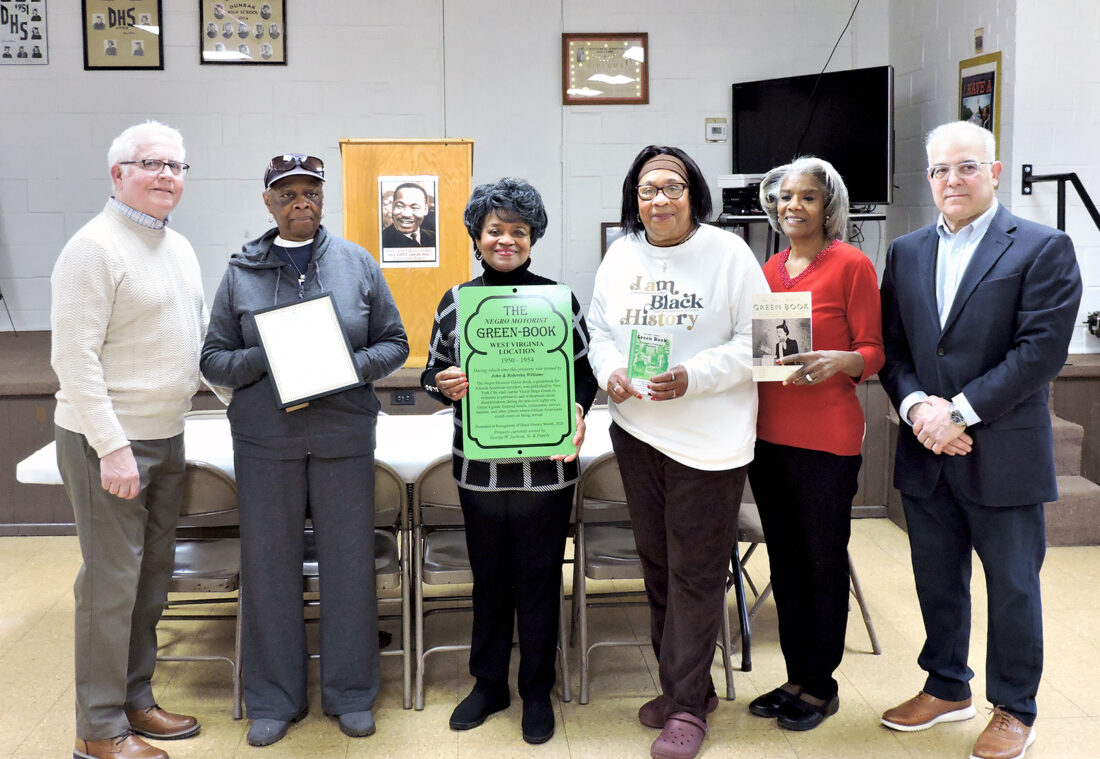
HISTORY REMEMBERED — The City of Weirton has recognized the efforts of John and Robertha Williams, who opened their home to traveling African Americans and provided a safe place for them to rest during the Jim Crow era of 20th century America. With a sign which will go on display on the property where the house once stood are, from left, Mayor Dean Harris; Dunbar Center Director Earleen Jones; Beverly Branham, Darlene Gory and Stephanie Valentine, all great nieces of the Williamses; and City Manager Mike Adams. -- Craig Howell
WEIRTON — A Weirton family was recognized this week for their relative’s role in providing safe passage to African Americans traveling through a segregated nation in the mid 1900s.
Approximately eight months ago, city officials were made aware of the efforts by John and Robertha Williams to provide haven to Blacks making their way through the area from 1950 to 1954, with their home among those listed as part of the Negro Motorist Green Book.
“We think it’s time to recognize their efforts,” explained Mayor Dean Harris.
The property where the home once stood is owned by George W. Jackson Sr. and his family, and is located next to the Dunbar Recreation Center on Kessel Street.
Tuesday afternoon, members of Williams’ family — great nieces Beverly Branham, Stephanie Valentine, and Darlene Gory — gathered at the Dunbar Center to help unveil a historical marker to be placed on the property in recognition of their relative’s generosity.
“Our great uncle opened his home during the Green era,” Branham said.
Founded by Victor Hugo Green, a postal worker from New York City, the Negro Motorist Green Book was published annually from 1936 to 1966 and included a registry of lodgings, restaurants, hair salons, bars and other homes and businesses where African Americans would find safety and hospitality in a time where racial discrimination was still pervasive in the United States prior to the Civil Rights Movement and often encouraged as a result of Jim Crow laws.
John Williams came to Weirton in 1923, earning employment at Weirton Steel. While he and Robertha didn’t have children of their own, they opened their home to family, including a niece and great nephew whom they raised, as well as the occasional traveler.
Williams also served as a deacon at Morning Star Baptist Church.
“He was such a special person,” Valentine said, noting the potential danger involved in being included in the Green Book during those years.
Gory noted while they all knew their great uncle, who died in 1987, none of them were aware of his contributions to local history.
A presentation also was made Sunday during worship services at Mount Olive Baptist Church, with other members of Williams’ family as well as the Jackson family in attendance.
Harris noted a copy of a proclamation, presented in honor of Williams, will be kept at the Dunbar Center, with plans for a copy of the historical sign to also go on display at the Weirton Area Museum and Cultural Center.
Local News
Wellsburg police station may move again
Two men rescued after heroic efforts at Tomlinson Run State Park

Trump uses longest-ever State of the Union to try to convince voters that U.S. is ‘winning so much’
Morrisey says budget proposal more fiscally responsible than House, Senate budgets
Trump pledges $10M to East Palestine for economic recovery
President Donald Trump said his administration will provide $10 million to East Palestine toward its ongoing ...