
The greatest mission need ever
Emotional and mental health needs have never been higher. Depression and anxiety, loneliness and social isolation, suicide and hopelessness, and countless addictions have become defining struggles of our time.
During a public debate on the existence of God, an atheist once asked a theologian, “What about people who commit suicide? Will they go to hell?” The theologian quickly replied, “We’re discussing the existence of God. Stay on topic.” The debate continued, and, as often happens in such exchanges, no minds were changed. Later, the theologian learned that the man he had been debating had recently lost his wife to suicide. The moment for something deeper had passed. Instead of trying to win debates, perhaps we should focus on winning people. One wonders what might have happened if the theologian had simply asked, “Why do you ask?”
Our world today is spiritually malnourished. Many people are searching for identity, meaning, and purpose. Some are drawn to false spiritualities, while others have become disillusioned with churches that appear lifeless or disconnected from the realities they face.
At the same time, families are breaking down at alarming rates. Absent fathers, divorce, domestic violence, and child neglect leave many longing for stability and belonging. Cultural confusion about love, gender, and sexuality has only deepened the uncertainty.
Society itself feels increasingly fractured. Ideological warfare, mistrust of institutions and authority, and political polarization dominate public life. Moral confusion abounds; what was once widely recognized as wrong is now called right, and what was once right is often dismissed as wrong. Added to this are economic instability, job insecurity, and homelessness. Many people are quietly carrying enormous burdens.
So, where is this great mission field? The answer may be closer than we think, right in our communities, our neighborhoods, very likely next door.
For many Christians, the word missions brings to mind traveling to distant lands or participating in short-term trips overseas. Those experiences can be meaningful, but the mission field begins much closer to home.
In Acts 1:8, Jesus told His disciples, “You shall receive power when the Holy Spirit has come upon you; and you shall be witnesses to Me in Jerusalem, and in all Judea and Samaria, and to the end of the earth.” In other words, the mission begins where we are, among our families, our neighbors, and our communities.
Having been involved in mission work around the world, I have seen that the same principles used internationally work just as effectively at home. It begins with something simple but profound: genuinely caring about people–loving people on purpose.
The next step is meeting practical needs. In some parts of the world, that may be as simple as offering a glass of water. Jesus described this kind of compassion in Matthew 25:35-36: “I was hungry, and you gave Me food; I was thirsty, and you gave Me drink; I was a stranger and you took Me in; I was naked, and you clothed Me; I was sick, and you visited Me; I was in prison, and you came to Me.”
In our own neighborhoods, such acts of kindness may look a little different: “I was your neighbor, and you brought me cookies. I was thirsty, and you invited me over for coffee. I was new in town, and you took the time to talk with me. My children needed encouragement, and you were kind to them. I was sick, and you visited me. I was lonely, and you came to see me.” I was your neighbor.
We may never travel to the Amazon jungle or walk among the Sherpas of the Himalayas. We may never help build churches in Africa or support the underground church in North Korea. But we can walk next door.
We can invite family members, friends, neighbors, and even strangers to God’s house, the place we call the church. As 1 Corinthians 12:27 reminds us, the church is the Body of Christ. When people encounter the Body of Christ, they are often encountering Christ Himself.
Perhaps the greatest mission field today is not across an ocean or on another continent. It may be just across the street. And the first step may be as simple as extending an invitation:
“Come to church with me this Easter.”
Local News

Wellsburg coffee shop opens with community spirit
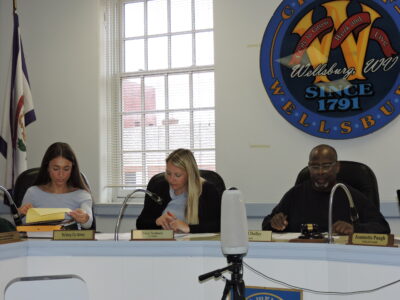
Grant sought for major Wellsburg water project
Daily Happenings
Police Beat Jefferson County Drug Task Force Man charged after search – A Mingo Junction man was booked into ...
The greatest mission need ever
Emotional and mental health needs have never been higher. Depression and anxiety, loneliness and social isolation, ...
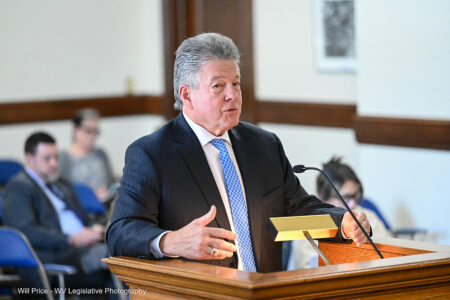
Plugged In: W.Va. works towards comprehensive energy plan
Church sermon topics
• Bell Chapel United Methodist Church: "You Are" • Cadiz Presbyterian Church: "A Path is Chosen" • Cove ...