Gravestones from 1860s uncovered at Steubenville housing site
Discovery prompts investigation, review of historical records
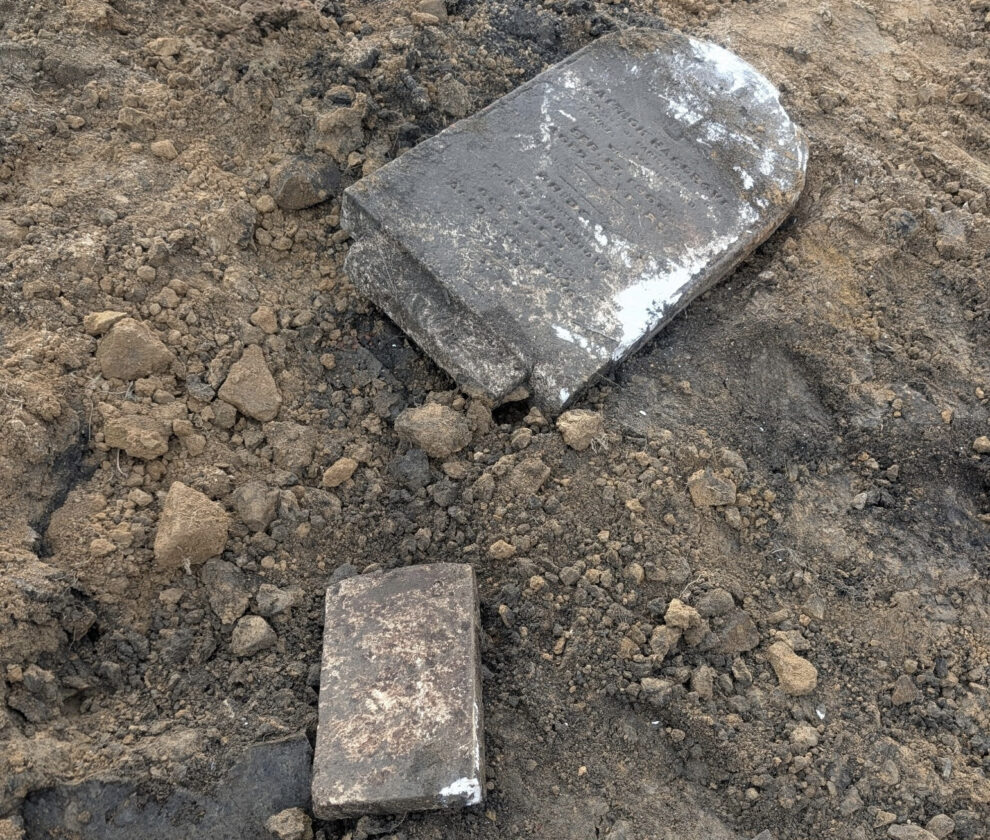
Photo contributed BURIED PAST — Gravestones dating to the 1860s, including some believed to mark children’s graves, were uncovered Tuesday during excavation at a planned senior housing site on Washington Street Hill in Steubenville.
STEUBENVILLE — Discovery of six aged gravestones during dirt-moving activities Tuesday on the grounds of a planned senior housing complex at the top of Washington Street Hill sparked concern from council members and the public alike during City Council’s weekly meeting.
The markers, which include at least two memorializing children, date to the 1860s.
“As they were excavating this morning, they uncovered tombstones from the 1800s and work has stopped,” City Manager Mike Johnson said. “They plan to install fencing around the site (today), conduct ground radar on Thursday and are working with an individual to see if the Steubenville Diocese has any records related to the headstones.”
Johnson said environmental assessments “were previously completed by both the owner and the state and the site has been cleared and individuals confirmed that they followed all the proper procedures before resuming work.”
“Our building department is monitoring it closely and will ensure no work starts until all the proper procedures are followed,” he added.
WODA is building the 50-unit senior housing complex behind The Laundromat on a parcel that had at one time been a Catholic cemetery. Graves there were supposed to have been moved to Mt. Calvary Cemetery after it opened in 1883, but sources say the names on the six stones uncovered so far haven’t been located in the Mt. Calvary records. The diocese sent local priests to the work site earlier Tuesday to observe and report, but the burials predate formation of the Steubenville Diocese, so authorities in Columbus have been asked to search their records for information.
In a 2001 article published by the Steubenville Historical Association, however, a local historian, Chalmers C. White, who had extensively researched the community years before, was quoted as reporting “the Old Catholic Cemetery that opened in 1854…was 2 ½ acres in size and the only bodies that were removed were those who had friends or relatives that sponsored their exhuming and removal to other cemeteries and, Mr. Chalmers stated, ‘There are still bodies buried there.'”
Council members Tracy McManamon and Heather Hoover pointed out they’d opposed the WODA project, with Hoover noting that the presentation its principals made to council didn’t match up to what she’d heard them say during their meeting with the zoning board.
“I also voted no against that project, and in fact, at the time when this gentleman was here, I asked him if they’ve done any testing to make sure that there was nothing underneath (the soil),” McManamon said. “And he indicated to me in this council chamber that they already did radar testing, ground-penetrating radar testing, so that’s why they were moving forward with this. Obviously, they missed some things…”
McManamon called it a “moving target.”
“So I’ve seen the conspiracy (theories), I’ve seen what everybody thinks is there, and I asked the public to just calm down, wait till we figure out what exactly is there. It’s going to take some time, it’s going to take a long time to get these records.”
“That was an old cemetery, they moved people in perpetual care,” one resident said. “If your family was in town and had money, they moved them. Any body else (was left behind).”
Another pointed out “old cemeteries have been discovered or moved” in other communities, “and not always (with) respect.
“I just hope the city takes every opportunity to figure out who these people were, why they were left behind … a lot of times it’s the indigent who are left behind because there’s no one to care for the
Local News
Morrisey Signs Bill Repealing High School Transfer Rule
LANSING, W.Va. – Gov. Patrick Morrisey said Tuesday he signed a bill repealing the controversial student transfer ...

Riesbeck’s and Shadyside Fellowship Food Pantry work together to provide for residents in need
Community Briefs
Jefferson Co. to observe Child Abuse Prevention Month STEUBENVILLE — April is National Child Abuse Prevention ...
Cross set to retire from Brooke County Prosecutor’s Office
Gravestones from 1860s uncovered at Steubenville housing site