
Budget Shortfall May Pose Problems for New Projects, Steubenville Council says
Trending
STEUBENVILLE -- With departmental spending requests exceeding anticipated revenues by $1.5 million, Steubenville Finance Director Dave Lewis said Tuesday they'll have to sharpen their pencils to balance the 2027 budget.
Lewis said they'll be reviewing available fund balances, grants and other funding sources over the next few weeks "to determine how much of each department's requests we can accommodate."
"We will work to fund as many priorities as possible, but given the budget shortfall, some requests may need to be reduced or deferred," he said, adding they'll "have a better grasp in a few weeks, especially after we have final health care numbers and definitely after we close out the book for 2026."
Health care claims have been lower than expected so far this year, "which could help offset some of the shortfall if that trend continues," he said.
"However, the city's 'stop loss' insurance, which covers claims exceeding $100,000 per person, is projected to increase due to the carrier's continued assessment of the city's risk," he said.
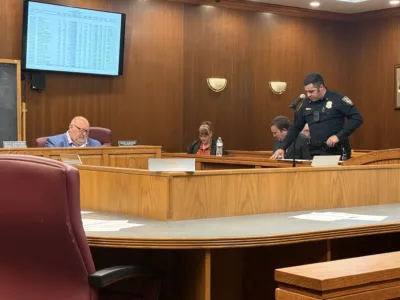
Police Chief Wes Crawford asked council to consider funding body camera subscription fees, city camera maintenance and upgrades, drug dog, weapons maintenance and upgrades. He also requested $66,000 to cover the two-year subscription renewal for his department's license plate reading cameras, pointing out the grant currently funding them expires in March.
"I'm not going to ask (them) for that again just because I don't want their name getting dragged through the mud, they've been great to us," he said, adding they're looking into the possibility of securing other grant funding.
Councilman Royal Mayo said he's still opposed to them, while Mayor Ralph Petrella told the chief as a father himself, he understands the importance of police having access to the LPR network in the event a child is missing or abducted.
"I think they're a great tool," Petrell said. "My question is, you being the expert–there's no dollar sign (you can put) on a life but do we utilize these cameras enough to justify that much money?"
"I think to this point we have used them," Crawford replied. "You hear about the (big) news stories, right? But my thought is they're used every day for lengthier investigations. I'm not going to get into specifics, obviously, but I think back to past violent crimes that we've had that I know would have been solved (if we had the technology then). I can think of one in particular, a shooting near here on Fourth Street -- we had a vehicle description, everything except for the plate. There's no doubt in my mind if we would have (LPRs then) it would have been (solved)."
After the meeting, he said his "asks for the budget mostly center around concern for public safety, crime prevention, responding to crimes in progress."
"Increases in overtime, equipment and training will put more well-trained officers on the street with the latest technology to achieve our mission," he added.
Among Parks & Recreation Director Don Patterson requests in addition to routine budget items, was funding to provide a more secure entry at the Martin Luther King Recreation Center ($30,000), remodel the kitchen and restrooms at MLK ($12,500), repair/replace the HVAC ($50,000) and restroom timers ($10,000).
"I don't know who else has been in there, but you can just walk in," he said. "Anybody can walk in and do anything."
Patterson said he wants to enclose the entry, "make it a double entry -- move the front desk over to where people actually will have to come (there) and when they come in, they've have to either have an ID or already be registered and we'll buzz them in so (they) can't just go in, they'll get buzzed in."
"We're just trying to make that place secure," he said. "I've already had a couple incidents where my staff were terrified of people coming in there and luckily I was there to kind of get them out. But that place needs to be secure, and it's not."
Mayo was critical of the plan, saying it's not going to be a secure building.
"We're not searching anybody," he said. "Once you're in a recreation center you're interacting with the staff. So what would make you just walk in and then do whatever you do once you get buzzed in? Because it's not a secure building once you're in there, they didn't (search) you to come in. They don't know what you (have) in there."
"We plan on checking," Patterson replied. "We're redoing that whole front when you come in -- you'll have to get registered in our system."
"There's no security staff there to check somebody when they come in," Mayo countered. "To spend $30,000 to just move stuff around...really doesn't improve security because you're not hiring security to be there."
Councilman at large Joel Walker questioned how staff is going to know a child is who he says he is, pointing out not every child has an adult family member who is going to walk in the door with them.
"I don't understand how you're going to ID young kids that come in there, they come there because that's a place for them to go...Some parents don't keep track of their kids, they just let little Timmy run out the door and then Timmy shows up (somewhere) and if Timmy's trying to come there to be safe and you keep asking him for this or that and telling him his parents have to sign something...some parents won't sign anything.
"We'll have a waiver," Patterson said. "We're not going to turn a kid away, right? But we'll get whatever information they give us" and send them home with a waiver for parents to sign.
"How do we follow up with that the next time when they don't bring it (back)?" Petrella asked. "Do we kick them out the second time?"
"I'll reach out and try," Patterson replied. "If I have to go take someone home I'll do my due diligence."